
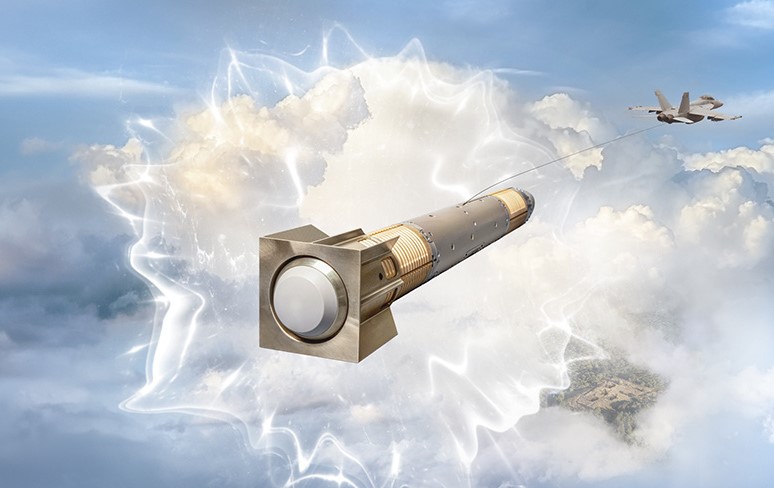


The US has chosen BAE Systems to develop the Dual Band Decoy, a new radio frequency jammer to be used to counter enemy attacks.
The US Navy has chosen BAE Systems to develop the Dual Band Decoy (DBD), a new radio frequency jammer based on the combat-proven AN/ALE-55 Fiber-Optic Towed Decoy to be used by fighter jets to counter enemy attacks.
The DBD will consist of a towed unit connected to electronic warfare equipment onboard the US Navy's F/A-18E/F Super Hornets by fiber-optic cables. It will utilize its jamming capabilities to disrupt enemy radars and lure missiles away from the aircraft.
The decoy can be launched manually and automatically and will have the ability to be updated in the future to counter emerging threats.
“With Dual Band Decoy, we are building on the ALE-55’s years of mission success as a high-powered jamming system,” BAE Systems Advanced Compact Electronic Warfare Solutions director Don Davidson said.
Work on the DBD will be performed at BAE's Nashua, New Hampshire, facility.
BAE's US Air Support
BAE has supported the US Army's push for air capability modernization, taking part in or spearheading major projects in recent years.
The company was chosen by the Air Force Research Laboratory to help develop the Integrated Cockpit Sensing platform, a data acquisition system that helps read the physical condition of combat jet operators, such as heart rate, respiration, and skin temperature.
In February, BAE was also chosen to provide advanced electromagnetic warfare mission systems for four US Air Force EA-37B planes, building on its Compass Call technology to “deliver powerful, long-range electromagnetic attack capabilities" that can disrupt electromagnetic threats.
