


The UN and Red Cross have urged governments to adopt binding international rules on autonomous weapons amid concerns over human control.
The UN and the International Committee of the Red Cross (ICRC) have urged governments to negotiate a binding international agreement on autonomous weapons, warning that machines could soon be allowed to select and attack people without human control.
Unlike remotely operated drones, autonomous weapons can use sensors and software to identify and engage targets after activation, without requiring a person to approve every strike.
The UN and ICRC also warned that reducing human control over lethal decisions would make it more difficult to determine responsibility for violations of international humanitarian law.
“We are now dangerously close to crossing a moral red line: the autonomous targeting of humans by machines,” UN Secretary-General António Guterres and ICRC President Mirjana Spoljaric said in a joint appeal.
 People in high-visibility vests clear debris after a Russian drone strike in Odesa, Ukraine, on June 1, 2026. Photo: Nina Liashonok/NurPhoto via AFP
Efforts to Regulate Autonomous Weapons
The UN General Assembly and experts working under the Convention on Certain Conventional Weapons (CCW) have made progress in clarifying the level of human judgment and control required under international humanitarian law.
However, technological development has outpaced negotiations on specific, legally binding standards.
Discussions have continued since 2014 through the CCW expert group, which will meet in Geneva next week to consider potential new rules.
States agree that international humanitarian law applies to autonomous weapons, but specific binding international standards remain largely absent, according to Reuters.
The US and Russia are among the countries opposing a new legally binding instrument, arguing that existing law is sufficient.
Because the CCW process requires participating states to reach consensus before formal negotiations can begin, their opposition could block further progress.
 People walk through rubble and debris outside a school in Gaza. Photo: Moiz Salhi/Middle East Images/AFP
Risks to Civilians
International humanitarian law prohibits attacks against civilians and civilian infrastructure.
However, autonomous weapons may make it harder to determine whether an attack remains lawful as battlefield conditions change.
Laurent Gisel, head of the ICRC’s Arms and Conduct of Hostilities Unit, said a combatant could surrender or become wounded after a weapon had been activated, while civilians could enter its area of operation.
The system could also encounter circumstances that had not been anticipated. Such changes could prevent an autonomous system from correctly identifying who remains a lawful target.
“Is not a story of precision, distinction and restraints. It is a story of civilians killed, families displaced, hospitals, schools and homes destroyed at ever greater speed and scale," stated Gisel.
Although the ICRC said there is currently no confirmed evidence that fully autonomous weapons have been used to target people, Reuters reported that researchers had tracked roughly 200 autonomous weapon systems across conflicts in Ukraine, the Middle East, and Africa, all of which have caused extensive civilian harm.
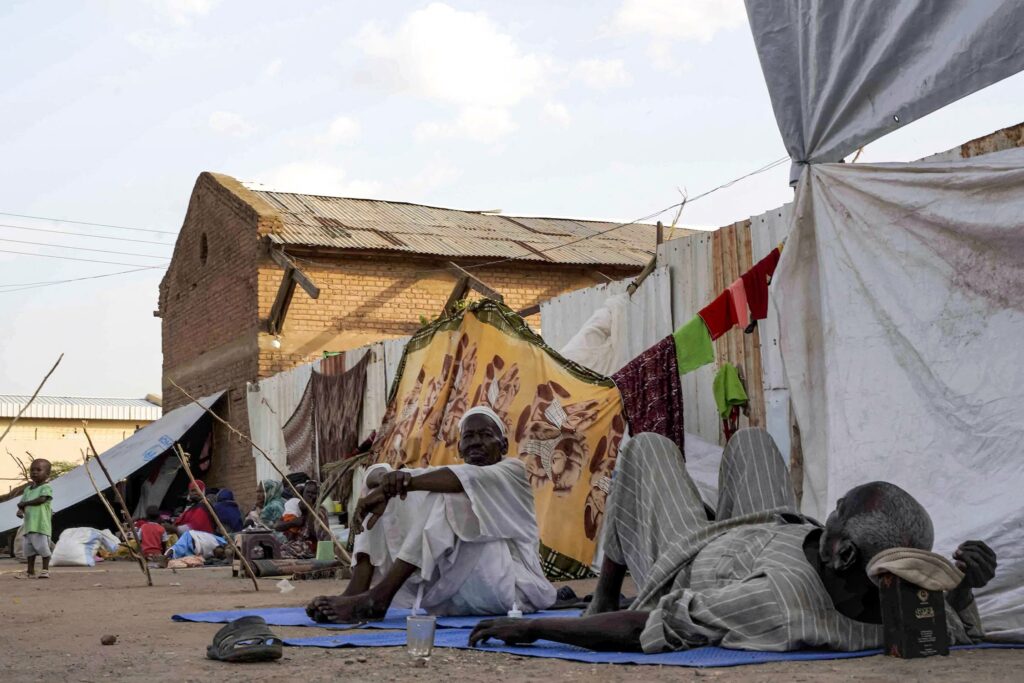 Men sit and lie outside tents and shelters pitched at the Hasahisa secondary school on July 10, 2023, which has been made into a make-shift camp to house the internally displaced fleeing violence in war-torn Sudan. Photo: AFP