


Germany has awarded Kongsberg a 3.5-billion-krone ($380-million) contract to procure additional Joint Strike Missiles.
Germany has awarded Kongsberg Defence & Aerospace a 3.5-billion-krone ($380-million) contract to procure additional Joint Strike Missiles (JSMs) for its upcoming fleet of 35 Lockheed Martin F-35 Lightning II aircraft.
The contract builds on a 6.5-billion-krone ($642-million) agreement signed by Norway on Berlin’s behalf in 2025, making Germany the fifth customer for the newly operational cruise missile after Norway, Japan, Australia, and the US.
“The new order shows the importance of JSM for F-35, where Germany has started building up its readiness level of the missiles,” executive vice president and head of the Missiles and Aerostructures division at Kongsberg, Øyvind Kolset, said.
Bilateral Cooperation
The acquisition is being carried out under the same bilateral framework used for Germany’s earlier procurement of the Naval Strike Missile (NSM) Block 1A and the joint development of the next-generation NSM, known as the SuperSonic Strike Missile Tyrfing.
Under the framework, the two countries have also cooperated on the acquisition, operation, and maintenance of the new 212CD submarines.
“When Norway and Germany entered into the historic Hansa Agreement earlier this year, the goal was to establish even closer and more operational defence cooperation between our two countries,” Norwegian Minister of Defense Tore O. Sandvik said.
“The JSM agreements show how we are already translating the strategic partnership into concrete capabilities that strengthen both our own defences and NATO.”
Joint Strike Missile
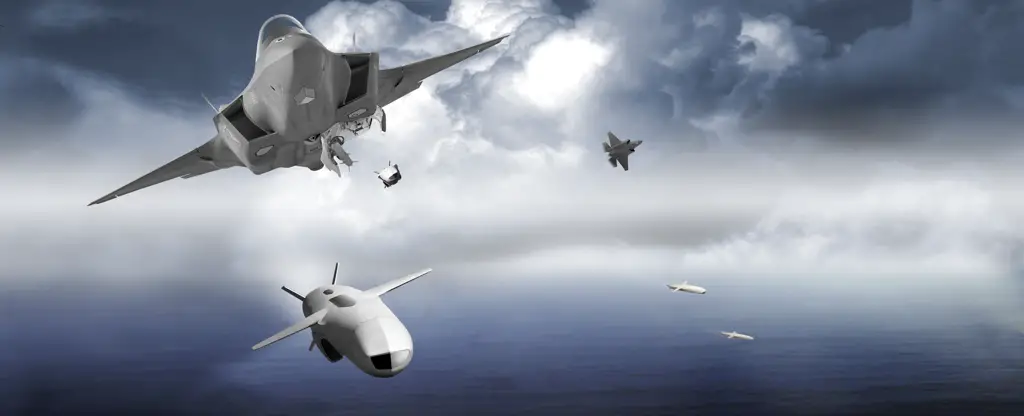
The JSM is a 4-meter (13-foot) precision-guided weapon designed to fit inside the F-35’s internal weapons bay, preserving the aircraft’s stealth profile and range.
Weighing 416 kilograms (917 pounds), the missile can strike land and naval targets at ranges of up to 350 kilometers (217 miles), although low-altitude flight profiles reportedly reduce the range by about half.
Optimized for anti-surface warfare and naval fire-support missions, the JSM carries a 118-kilogram (260-pound) warhead and uses GPS, inertial navigation, and terrain-reference mapping for guidance, including in GPS-denied environments.
Additional features include a two-way data link and advanced mission-planning capabilities for optimized targeting and flight paths.
