
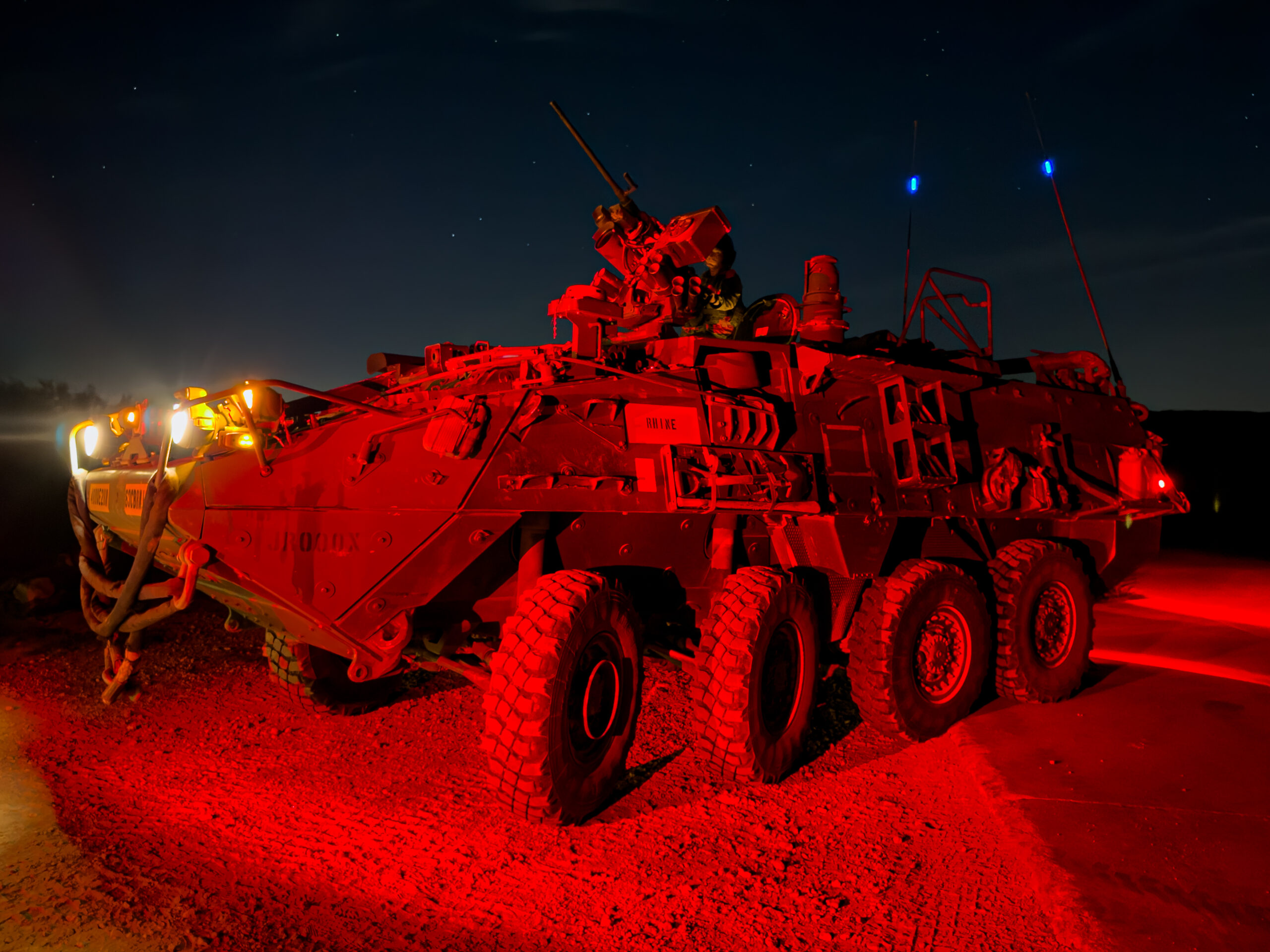


Teledyne FLIR Defense has signed a $168.3-million framework agreement to launch low-rate initial production of sensors for the US Army’s M1135 Nuclear, Biological, and Chemical Reconnaissance Vehicles.
Teledyne FLIR Defense has signed a $168.3-million framework agreement to launch low-rate initial production of sensors for the US Army’s M1135 Nuclear, Biological, and Chemical Reconnaissance Vehicles (NBCRVs).
The effort will assemble the company’s improved chemical, biological, radiological, and nuclear sensors that feature autonomous capabilities to integrate with FLIR’s proprietary SkyRaider unmanned aerial system and MUVE B330 biological detector drone payload.
The army received an initial batch of sensor suite prototypes for evaluation in October 2023. Data from these tests were used to facilitate the latest production contract.
A $7.5-million order has already been placed to deliver the sensors, according to the firm.
Work for the program will be facilitated through 2029 at the company’s centers in Oklahoma, Maryland, and Arizona.
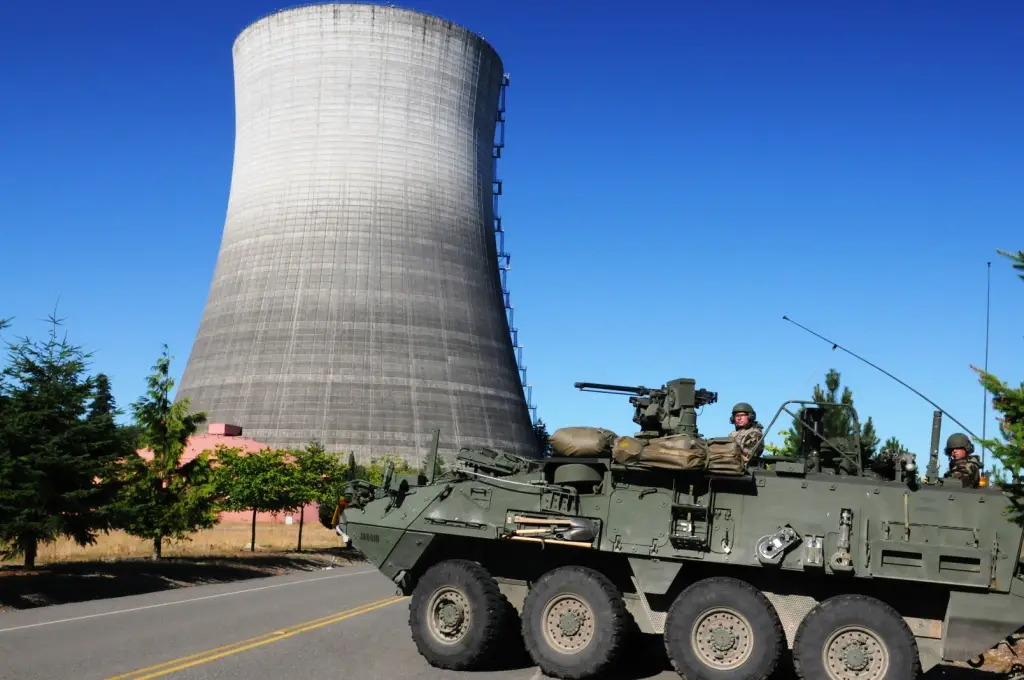 M1135 Reconnaissance Vehicle team conducting hazardous response drill at a nuclear power plant area. Photo: Sgt. Mark Miranda/US Army
“The advanced sensor capabilities on NBCRV will help protect our troops from weapons of mass destruction and enhance mission success on future battlefields,” Teledyne FLIR Defense President Dr. JihFen Lei stated.
“We’re honored to continue our work with the Army, leveraging our [unmanned aerial system] platforms and remote sensing solutions to deliver the NBCRV Sensor Suite.”
The Nuclear, Biological, and Chemical Reconnaissance Vehicle
The M1135 NBCRV is a variant of the M1126 Stryker infantry carrier vehicle developed in the early 2000s by General Dynamics Land Systems-Canada for the US Army.
It is specifically designed for chemical, biological, radiological, and nuclear missions that deliver protective measures to address threats ranging from toxic substances to weapons of mass destruction.
The 8x8 vehicle measures 7 meters (23 feet) long and is covered with armor that can repel 14.5-millimeter ammunition.
It can accommodate up to four people and is fitted with a 350-horsepower Caterpillar 3126 turbo diesel engine, which provides an operational range of 500 kilometers (311 miles) and speeds up to 100 kilometers (62 miles) per hour.
